- Shared Science
- Posts
- #01 Shared Insights: A year of Shared Science
#01 Shared Insights: A year of Shared Science
October 2025




Ceridwyn Roberts, Annabel McAleer, Kylie Bailey & Allanah Robinson
September 02, 2025 • Estimated Reading Time: 4 minutes
We know we launched a science business at the worst possible time. (Job losses, budget cuts💸… we don’t need to recap it for you!) Thankfully, it's been a whole year of Shared Science, we're still here, and we thought we’d use our first newsletter to chat about how it's going.
The conversations started as the National Science Challenges wound down. We'd all been working closely together and were not-so-secret admirers of each other's work. We all wanted the flexibility of self-employment but didn’t want to compete for the same small pool of scicomm work. We figured there was a better way, where we could instead be each other’s support network and safety net, and continue to collaborate when opportunities came our way.
We think of our business model as being like a hairdresser in a fancy salon: you share the salon’s space, brand, and reputation, but your clients pay you direct. We were told lawyers call this model “eat what you kill”, but we’ll take the hairdresser analogy!💇♀️
It’s been working out great. We’ve passed work around, looped in others’ skillsets, and had all the advice, help and backup we’ve needed, on tap. The work we’ve been getting has been challenging, interesting, and – best of all for our crew of curious generalists – varied.
Yet in this current climate, wow, it’s also been nerve-wracking.
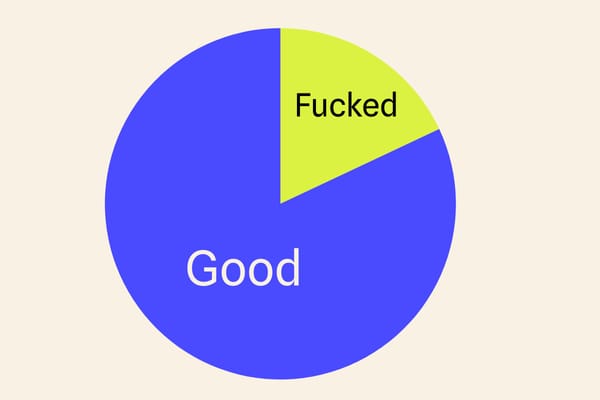
This pie graph that we stole from The Bear (on Disney+) sums up how we feel about being in the science business right now
There have been times where the calendar looks scarily empty in upcoming months! In retrospect, we were wildly optimistic going into this. Although the funding environment was looking uncertain even then, we’d seen first-hand the huge wins the NSCs had embedding comms people in research programmes. We all had a lot of hope that this approach would spread.
Now? Weeellll, that optimism has faded a tad. Unfortunately, this seems like it’ll be a long, slow shift, yet one we’ll continue advocating hard for and which fuels our fire for why Shared Science exists.
The upside is that we're building a genuinely lean business, with the flexibility to withstand future unstable periods or downturns. Like Sinatra sings (almost), “If we can make it now, we can make it anytime!” 🎶💃
It’s why we’re now working to diversify our client base, so we’re not so reliant on government-funded science. But marketing ourselves is much harder than marketing for clients! In scicomm we’re all about phrases like “preliminary results suggest...” but that kind of approach makes for hilariously bad marketing copy. We’re figuring it out and recalibrating as we go... meanwhile our LinkedIn posts are going through more peer review than some journal articles. 🤣
If you’ve got a complex challenge you want help communicating, or are a small science-based business also trying to navigate this rocky period, we’d love to hear from you.

What we’ve been up to
Ceridwyn has been - websites for Devora (sp) and EDF/RESET. Counted - 29 websites. Also…?
Annabel and Allanah - ag emissions
Kylie’s work with Dr Jessica Hutchings and Dr Jo Smith from Papawhakaritorito Trust continues
Health stuff - Kylie?
Allanah (as facilitator) and Annabel (as a presenter) contributed to the Ellett Trust and Rural Leaders pilot Engage Programme for the communication of agricultural research to farmers.
We’ve each been grappling with the ethics, advantages, and oh-hell-noes of using AI in science communication. Watch this space – we’ll have more on this in our next issue.

Our first event! Annabel and Allanah took Shared Science to the Agri Exchange tent at the Wanaka A&P Show, where they had some great science chats and were in a photo their friends found highly amusing
How do you report science that doesn’t deliver?
 | We talk a lot about impact at Shared Science, but what can you do when a project’s predicted impact doesn’t materialise? Some valuable insights come from experiments that didn't work, hypotheses that were wrong, or research that raised more questions than it answered. We've written up a case study about how we helped communicate the results of a project that didn't go to plan. |
Cool things
YOU. Starting a new business that depends on a thriving science sector has felt somewhere between brave and foolish for each of us. Your support – subscribing to this newsletter, following us on LinkedIn, cheering us on – means a lot. Thank you.
This article on the credibility crisis in behavioural science. What happens when someone in your field publishes work that might be…bullshit? This great example of science journalism asks what went wrong in behavioural science and how the discipline has clawed itself back from ridicule, and in the process shines a light on science and research processes for lay audiences. Well-told, accessible, and compelling.
There’s a new scale to measure public trust in science. Researchers in Germany have published an updated and validated PTruS scale. It extends the original 3-factor scale (expertise, benevolence, integrity) to include ‘transparency’ and ‘dialogue orientation’, highlighting that scientists, rather than science as an institution, are central to building and changing public trust in science. (Side note: We can help with this. Just ask.)
OMG did you know… Peanut butter on toast is not only a delicious breakfast but also the most climate-friendly of all New Zealand’s fave toppings on toast? True even if you slather on the butter first. Read the study. Avo on toast also rates well, although avo season still feels quite far away 🥑🥶 #weirdscience
“Mad scientist” or “heroic genius”? This cute study from the Journal of Science Communication found that scientists in documentaries are still more likely to be older (greyer) white men, but it’s gradually changing, especially for short or animated films. The mad scientist trope is thankfully fading, but movies still don’t show true diversity or the realities of collaboration in science settings, perpetuating the myth of the isolated heroic genius.
Scicomm Tip #1: Your expertise is your superpower and your blind spot
 | Before presenting or publishing, find someone who represents your actual audience. Give them your draft and watch where they pause, frown, or ask "wait, what?" What feels like basic background to you might be where you lose half your audience. A quick reality check with a genuine audience member (or us!) often beats your colleagues’ reviews when it comes to actual communication. The test: If they can't follow it, neither can your real audience. |
Get in touch
Over the next month, we’re keen to talk with researchers and programme leads who are thinking about impact stories and research synthesis. We’re always up for a quick video call! We’ve got capacity for new client work from mid-September.
If you were forwarded this email, you can subscribe here. If you enjoyed this email, please share it with people you think might be interested!
If you think this email was too long, please tell us! We debated it 🤣

